For decades, hunters chose gear the way anglers chose lures: by pattern. A convincing camo print, a warm jacket, and a solid pair of boots were considered enough to get the job done. Today’s hunters operate in a far more demanding environment—whitetail stands in late-season snow, waterfowl blinds in freezing rain, spot-and-stalk mountain hunts at altitude. The bar has risen. What gets called high-performance hunting apparel is no longer defined by how well it disappears in the trees; it is defined by whether it keeps the hunter dry, quiet, warm, and mobile through hours of cold, wind, and physical exertion. This guide breaks down the technical features that matter most, and how brands can partner with a manufacturer that understands both the field and the factory floor.
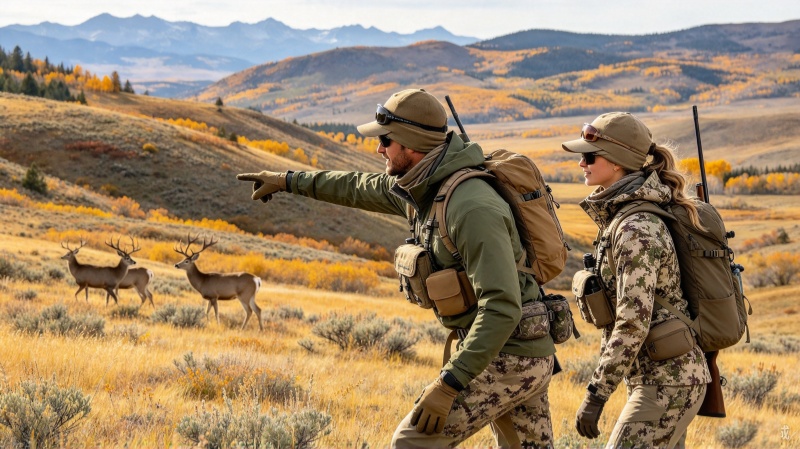
1. Why Camouflage Alone Is No Longer Enough
A camo pattern that breaks up your outline is necessary, but it solves only one problem: visibility. The modern hunt creates a longer list of demands that pattern alone cannot answer.
1.1 You must stay dry while sitting motionless in a rain-soaked blind.
1.2 You must stay warm when the mercury drops, but still release heat when climbing a ridge.
1.3 You must not let a zipper, a swishy nylon shell, or a poorly placed pocket snap give you away at thirty yards.
1.4 You must trust that a seam, a cuff, or a reinforced knee will not fail on day three of a seven-day backcountry hunt.
Hunting camouflage clothing that only looks the part leaves the hunter exposed to the weather, exposed to their own noise, and exposed to the wear and tear of real field use. That is why brands and serious hunters increasingly evaluate gear through a performance lens: what does this fabric do, not just what does it look like. Pattern is a baseline, not a finish line.
2. The Core Technical Features of High-Performance Hunting Apparel
At the factory level, building technical hunting gear starts with understanding four functional layers: weather protection, acoustic performance, thermal management, and mobility. Each layer must be engineered independently, then integrated into a garment that works as a system.
2.1 Weather Protection: Waterproof, Windproof, and Breathable Fabrics
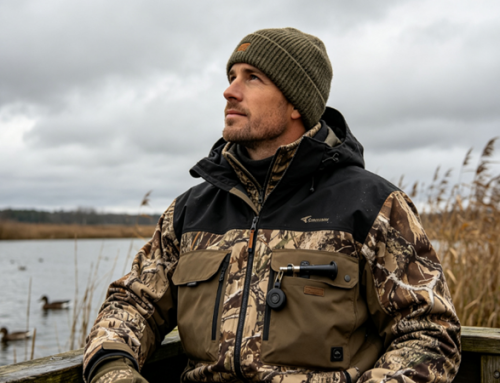
The single most common reason hunters abandon a stand is not cold—it is wet. A serious shell must deliver three things at once: a waterproof barrier, a windproof membrane, and breathability that releases sweat during the hike in.
At the fabric level, this usually means a 2.5L or 3L laminate construction: a face fabric, a waterproof-breathable membrane (PU or ePTFE-based), and a protective inner lining or backer. Waterproof ratings are specified in millimeters of hydrostatic head; serious outer shells commonly meet 10,000 mm to 20,000 mm or higher. Equally important is MVTR (moisture vapor transmission rate), measured in g/m²/24h. A jacket that sheds rain but traps sweat becomes an internal rainstorm by mid-morning, leaving the hunter chilled on the stand.
Beyond the shell itself, every penetration point—zippers, seams, pocket openings—must be managed. Fully taped seams, water-resistant zippers, and storm flaps over main zippers are the difference between a jacket that performs and one that leaks exactly where you rest your bow arm. For OEM programs, seam-taping quality is often the first place to look when auditing a factory.
2.2 Quiet Construction: Noise-Reducing Fabrics and Seam Design
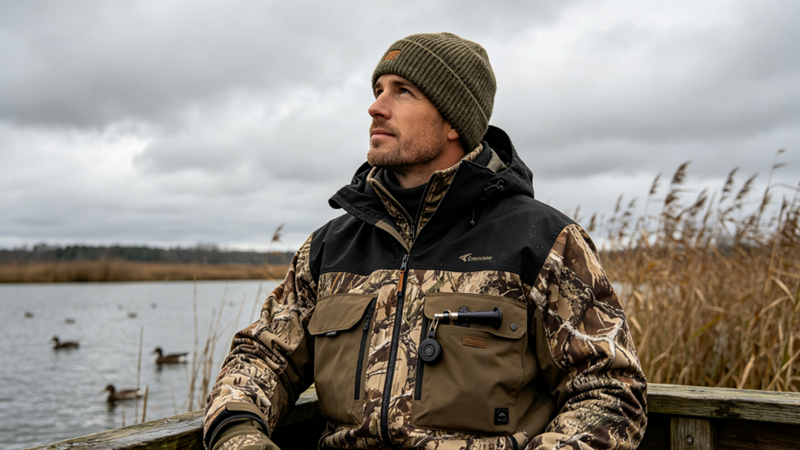
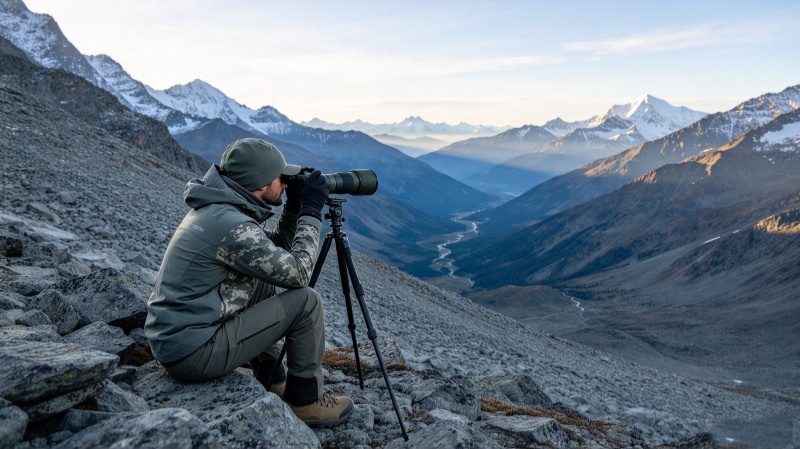
Whitetails and turkeys hear what human eyes cannot see. A swishing shell, a Velcro cuff that snaps open, or a zipper that chatters will expose you long before a bad pattern would.
Quietness starts with the face fabric. Textured or brushed nylons, polyester fleeces, and soft-shell weaves are dramatically quieter than shiny, taffeta-backed shells. Manufacturers test fabrics for acoustic performance the same way they test for water resistance: in controlled conditions, with the fabric rubbed or crumpled, and measured in decibels. A fabric that reads as “silent” in a showroom often reads very differently at dawn in a hardwood flat.
Seam construction matters too. Flatlock seams reduce bulk and prevent the crackle of folded seam allowances rubbing against each other. Angular darts placed away from the shoulder and bow arm reduce fabric pull when you draw. Even zipper choice matters: reverse-coil or molded-tooth zippers run quietly and seal better than open-tooth metal zippers.
2.3 Temperature Regulation: Layering Systems and Insulation
A successful hunt is a day of wildly variable exertion: a freezing dawn sit, a steep morning climb, a glassy afternoon stand. No single garment can solve all of it; the answer is a layering system.
Base layers wick moisture away from the skin. Mid layers—fleece, wool, or synthetic quilted insulation—trap air without absorbing sweat. Insulated hunting garments commonly use synthetic fill because it retains warmth when wet, unlike down, which collapses in rain or snow. For extreme cold, bib overalls with suspenders and an accessible crotch zipper solve a problem every late-season hunter knows.
For OEM programs, this means designing a system, not a single jacket: a shell that layers cleanly over a vest, a mid layer that packs into its own pocket, and sizing that works across all three pieces. A brand that sells a coherent system sells more units per customer—and earns loyalty when the system actually fits together in the field.
2.4 Mobility and Fit: Articulated Design for Long Hours in the Field
The best fabric in the world fails if the garment fights the hunter. A serious cut is built around the actual motions of hunting: the draw of a bow, the kneel in a blind, the step over a downed log.
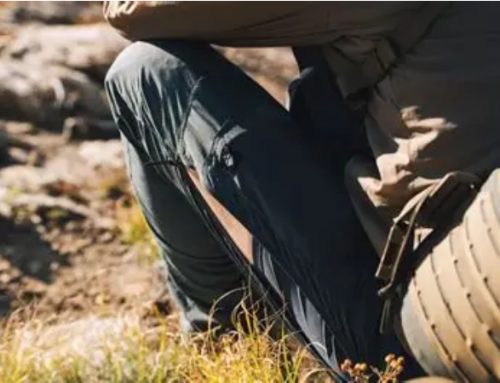
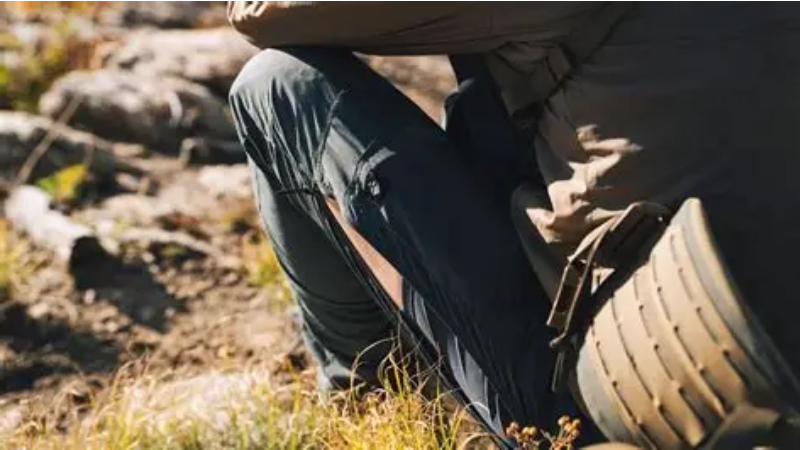
Articulated elbows and knees, pre-curved sleeves, gusseted crotches, and dropped back yokes all add up to a garment that moves with you instead of pulling or riding up. Adjustable cuffs, hem drawcords, and waist tabs let the hunter seal out drafts without compromising reach. A hood that fits over a cap and a bow quiver is a small detail that users notice immediately.
For brands, fit is also a sizing problem. A technical hunting jacket that fits a 6’2″ whitetail guide in Iowa must also fit a 5’8″ turkey hunter in Georgia—plus everyone in between. A manufacturer with robust size grading and fit-trial experience saves brands from costly returns, negative reviews, and the quiet complaint that kills repeat purchases: “great jacket, wrong cut.”
3. Camouflage Patterns: Beyond Visual Stealth
3.1 Seasonal and Habitat-Specific Patterns
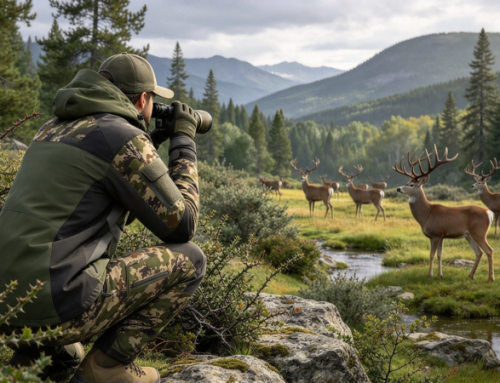
Pattern is still part of the equation, but it is now matched to habitat and season, not chosen by preference. Eastern hardwoods, western sagebrush, marsh cattails, and pine plantations each demand different scale, color palette, and contrast. Licensed patterns—Realtree, Mossy Oak, and comparable systems—carry both shelf recognition and royalties, a cost OEM clients must plan for early in the development cycle.
For camo garments, print method matters as much as the artwork. Sublimation printing delivers durable, colorfast all-over patterns that do not crack or peel; screen printing is more cost-effective for smaller runs and heavier fabrics; and laser-perforated or woven-in patterns offer advanced breathability in warm-weather designs. The wrong print method on the right pattern is a common—and avoidable—factory mistake.
3.2 Blaze Orange and Safety Considerations
In most states, firearms season requires blaze orange or pink on the head, chest, and back. Modern garments solve this with reversible shells or removable blaze panels: quiet camo for archery season, legal blaze for rifle season. A garment that handles both without doubling inventory is a clear win for brand owners and retailers alike, and it is a design problem a capable factory can solve in the first tech pack.
4. Durability and Field-Tested Construction
4.1 Reinforced High-Wear Areas
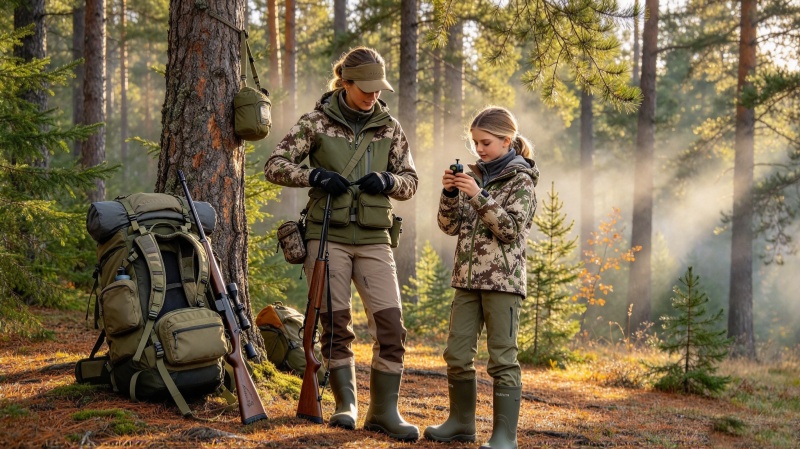
Hunting gear fails at predictable points: the seat, the knees, the forearms, the cuffs, and the shoulders where a backpack rides. A serious grade reinforces these zones with heavier fabric, bonded overlays, or double-layer panels. Bar-tacks at stress points—pockets, suspender attachments, belt loops—prevent seam blowouts after a season of kneeling, crawling, and packing out.
Field testing is not optional. A reputable manufacturer runs sample garments through real weather, real kneeling positions, and real pack loads before production, and adjusts the pattern accordingly. The cost of one revised sample is trivial compared with the cost of a recall.
4.2 Hardware, Pockets, and the Details Hunters Notice
YKK-quality zippers, silent pull cords, chest pockets that sit accessible while wearing a pack, stretch hand-warmer pockets, internal media ports, and a hood that fits over a cap—these are the details that turn a garment into gear.
Pockets are engineered, not added. A rangefinder pocket must sit at chest level where the hand finds it without looking. A game bag must be drainable. Every pocket must open without noise. Every zipper must close one-handed with gloves on. These are not premium features; they are the baseline of a credible hunting line, and they are where less-experienced factories most often fall short.
5. OEM and ODM Customization: How BOWINS Garment Develops High-Performance Hunting Apparel
BOWINS Garment (Taian BOWINS Garment Co., Ltd.) is a China-based functional hunting wears manufacturer with deep experience across ski, snowmobile, and hunting outerwear. For brands launching or scaling a hunting line, the company offers both OEM—client-provided designs and tech packs—and ODM—BOWINS-led development from concept to production—programs.
A typical development flow with BOWINS Garment includes the following stages:
Concept and fabric selection. Membrane choices, laminate weights, insulation type, and licensed-pattern support, aligned to the target season and price point.
Tech pack and pattern engineering. Size grading, fit trials, and motion analysis for the draw, kneel, and pack-carry positions.
Sampling. Pre-production samples, wear trials, and lab testing for hydrostatic head, MVTR, colorfastness, and shrinkage before bulk approval.
Production. Fully taped seams, four-thread overlock and flatlock construction, reverse-coil zippers, and hardware-level QA at every station.
Compliance and export. Labeling, hangtags, packaging, and shipping aligned to the brand’s target market and retail requirements.
Because the same factory builds ski pants, snowmobile jackets, heated apparel and hunting jacket, BOWINS brings membrane, insulation, and seam expertise that transfers directly to this category—without the learning curve of a general sewn-goods shop. For emerging brands, that means fewer revision cycles, more predictable lead times, and a partner who already speaks the language of hunters, not just the language of samples.
6.Conclusion:
Great camouflage disappears in the forest; great camo hunting clothing disappears under fatigue. The pattern gets you into the tree, but the fabric, seams, zippers, insulation, and fit decide whether you stay there—dry, quiet, warm, and ready when the buck steps out.
For outdoor brands, that is a real opportunity. The market rewards technical credibility, not just catalog photography. Partnering with a manufacturer that understands both the science of membranes and the realism of a December sit in a ground blind is how a brand turns product into reputation.
If you are developing a new hunting line, revising an existing shell program, or exploring licensed-pattern collaborations, BOWINS Garment is glad to review your tech pack or help you scope an ODM project. A short conversation up front usually saves months later in sampling and corrections—because in hunting, as in manufacturing, the best preparation happens well before the first shot.