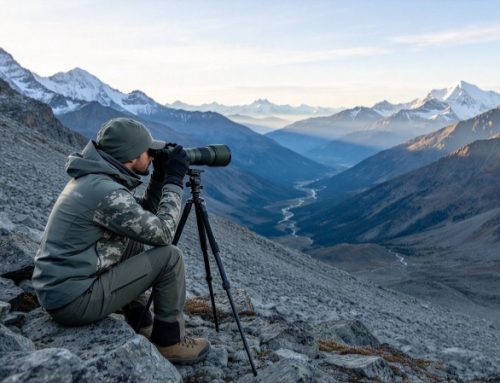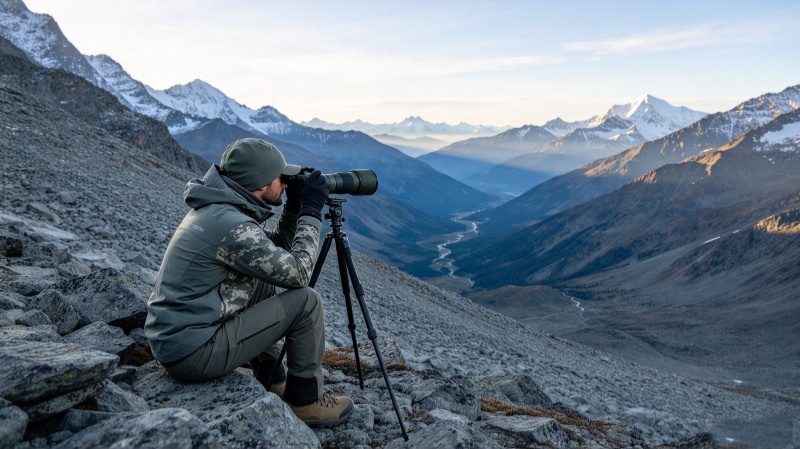
As any seasoned hunter knows, the weather doesn’t wait for you to get settled in your stand. Spring mornings bring a unique set of challenges—biting winds that cut through subpar layers, followed by unexpected showers that can turn a promising hunt into a miserable experience. The difference between a successful, comfortable day in the field and a shortened, frustrating one often comes down to one piece of gear: your hunting jacket.
For brand owners, retailers, and wholesalers looking to stock or source gear that actually delivers, understanding what makes a hunting jacket truly effective against wind and morning rain is critical. Your customers trust you to keep them dry, quiet, and focused when it matters most. Let’s break down exactly what separates a reliable hunting jacket from the rest.
1. The Anatomy of a Hunting Jacket That Performs
Before we dive into specific products, let’s establish the technical foundation. A hunting jacket that genuinely blocks wind and handles morning rain isn’t just a shell—it’s an engineered system.
1.1 Windproof Construction: More Than Just a Claim
Windproof doesn’t mean wind-resistant. True windproof construction requires either a membrane or a densely woven fabric that physically prevents air molecules from passing through. For manufacturers producing hunting jackets, achieving true windproof performance requires either:
- Laminated membranesbonded to a face fabric (higher performance, typically 2-layer or 3-layer construction)
- Tight-weave constructionswith specialized finishing (more breathable, often quieter)
1.2 Water Resistance vs. Waterproofing for Morning Rain
Here’s where many get confused. Morning rain on spring hunts is typically light to moderate—drizzle, mist, or brief showers. You rarely need a fully waterproof (20,000mm+) jacket for these conditions. What you need is reliable water resistance with a DWR (Durable Water Repellent) finish.
The sweet spot for spring hunting jackets is 5,000mm to 10,000mm water column rating. This range handles morning rain effectively while maintaining the breathability (5,000-8,000 g/m²/24h) that prevents you from getting clammy from the inside out -10.
Look for jackets specifying:
- DWR treatmenton the face fabric (causes water to bead and roll off)
- Sealed or taped seamsin high-exposure areas (shoulders, hood, upper back)
- PFAS-free construction—increasingly important for both regulatory compliance and environmental responsibility -4-8
1.3 The Silent Factor: Why Fabric Noise Matters
Standard rain jackets crinkle. That crinkling sound—barely noticeable at home—becomes deafening in the quiet woods when a wary tom is approaching. Quality hunting jackets address this through:
- Polyester fleece face fabrics(like Berber fleece) that absorb sound -2
- G-1000 Silentfabric technology (a recycled polyester/organic cotton blend) that combines durability with near-silent movement -8
- Brushed or peached finisheson technical fabrics that soften the hand feel and reduce noise -7
1.4 Strategic Insulation: Warm Where You Need It
Spring mornings start cold but warm quickly. The ideal jacket uses zoned or hybrid insulation—warmth where you need it (chest, back, shoulders) with lighter or no insulation in the arms and sides. This approach:
- Prevents overheating during the walk in
- Provides core warmth during stationary sitting
- Allows the jacket to work across a wider temperature range
Some manufacturers achieve this with removable liner systems (3-in-1 designs) or strategic Hydratic lining only in exposed areas like the hood, shoulders, and lower back -8.
2.Top 5 Best Hunting Jackets Review
Let’s examine five standout jackets that exemplify the wind-blocking, rain-handling performance discussed above. These represent the quality benchmarks your customers will be comparing against.
| Feature | Sitka Fanatic Jacket | Fjällräven Drev Hybrid | Härkila Driven Hunt HWS | BOWINS Wading Camo Jacket | Fjällräven Barents 3-in-1 |
| Windproof | ✓ WINDSTOPPER® by GORE-TEX | ✓ Hydratic lined | ✓ HWS® 2-layer membrane | ✓ HydroGuard system | ✓ Hydratic lined |
| Water Rating | Waterproof | 10,000mm | Waterproof | 20,000mm | 10,000mm |
| Breathability | High | 7,000 g/m²/24h | High | High | Moderate |
| Weight | ~900g | 1,060g | ~1,200g | Customizable | 1,915g |
| Key Feature | Built-in handmuff | Side ventilation zips | Radio pocket + magnetic closures | Detachable inner pocket | 3-in-1 removable liner |
| Noise Level | Silent (Berber fleece) | Low (G-1000 Silent) | Low (DWR polyester) | Low (treated fabric) | Moderate (G-1000) |
2.1 Sitka Fanatic Jacket – The Cold Morning Specialist
The Sitka Fanatic represents the premium end of the hunting jacket market. Its WINDSTOPPER® by GORE-TEX Labs membrane delivers absolute wind protection—no air penetration whatsoever. The jacket pairs this membrane with PrimaLoft® Silver insulation and an exterior Berber fleece that moves silently when you draw your bow. A standout feature is the low-profile handmuff integrated directly into the jacket, eliminating the need for separate hand warmers -2.
Best for: Whitetail hunters facing cold, windy late-season conditions. Retail price around $350-500.
2.2 Fjällräven Drev Hybrid Jacket – The Active Hunter’s Choice
Fjällräven’s approach prioritizes ventilation for hunters who cover ground. The Drev Hybrid uses G-1000 Silent fabric (65% recycled polyester, 35% organic cotton) with Hydratic lining placed strategically only on the hood, shoulders, lower back, and sleeve tops—areas most exposed to rain. The sides remain unlined with zippered ventilation openings running down both sides, allowing heat to escape during approaches -8.
Best for: Spot-and-stalk hunters and western terrain. PFAS-free construction. ~$875 retail.
2.3 Härkila Driven Hunt HWS Insulated Jacket – The Stand Hunter’s Choice
Built for static hunting in cold, wet conditions, this jacket features an 84% polyester, 16% polyurethane face fabric with a DWR treatment and a 2-layer HWS® membrane. Inside, 120-gram Thermo Poly Shield™ Fill wadding provides substantial warmth, with extra wool lining across the upper back. Practical features include magnetic flap closures (silent operation), a two-way zip with storm flap, and a removable hood -1.
Best for: European-style driven hunts and cold-weather stand hunting.
2.4 Fjällräven Barents 3-in-1 Hydratic Jacket – Maximum Versatility
This is the “one jacket for all seasons” solution. The Barents features a shell jacket made from G-1000 (recycled polyester/organic cotton) plus a zip-in pile fleece liner (100% recycled polyester). Worn together, they handle cold and wet conditions with a 10,000mm water column. Worn separately, the shell works for mild rain and the liner for cool dry days. PFAS-free construction throughout -4.
Best for: Hunters who need one jacket for varying seasons. ~$1,185 retail.
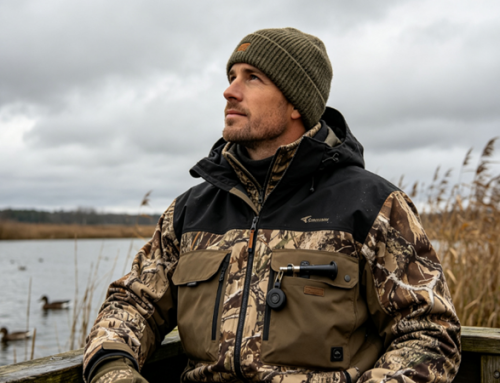
2.5 BOWINS Custom Wading Camo Hunting Jacket – The OEM Powerhouse
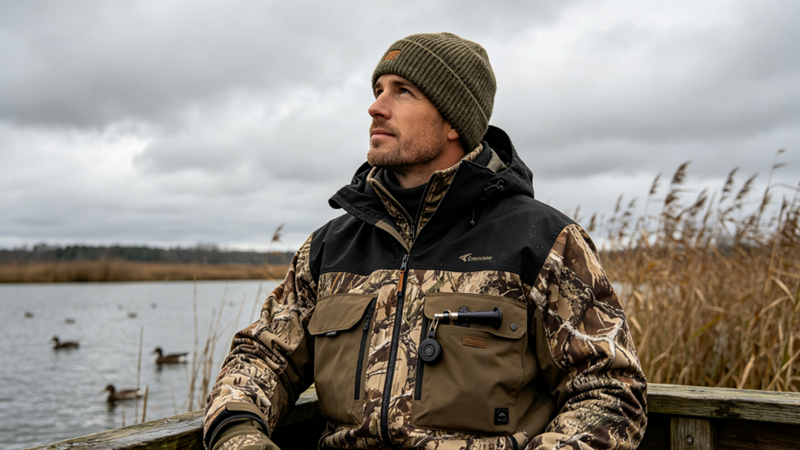
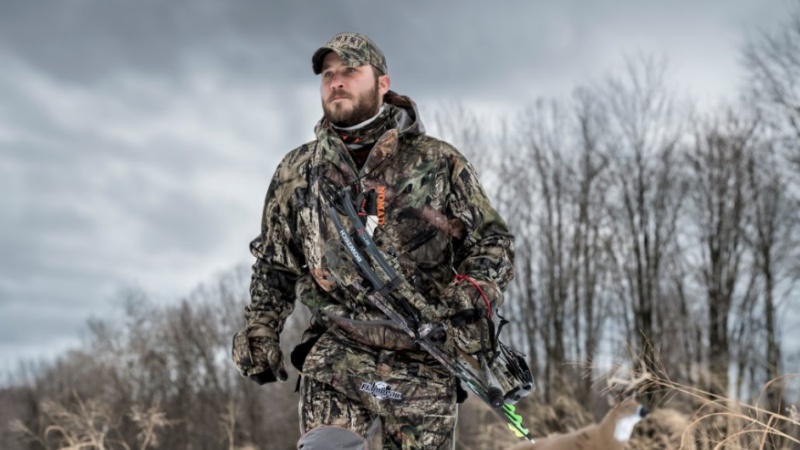
Representing exceptional manufacturing capability, BOWINS Garment’s waterproof camo winter hunting jacket demonstrates what contract manufacturers can achieve. Built with waterproof technology featuring triple-sealed seams, this hunting jacket achieves a 20,000mm waterproof rating—significantly higher than many name brands. Key hunting-specific details include:
- Short cut with high handwarmer pockets (optimized for wading)
- Integrated decoy hook system
- Corrugated shell holder pocket for quick ammo access
- Detachable inner pocket with waterproof zipper and touchscreen compatibility
- Fully adjustable 3D hood that blocks wind without restricting vision -3
- Best for: Waterfowl hunters and brands seeking OEM/ODM partnerships. Customizable specifications.
3. The Role of Hunting Jacket Manufacturers and Why BOWINS Garment is a Top Choice for Hunting Suits Suppliers
When you’re a brand owner, retailer, or wholesaler, the products you sell are only as good as the manufacturer behind them. Understanding what separates exceptional hunting wears manufacturers from average ones is essential to your business success.
What Sets Apart Leading Hunting Suits Manufacturers
The best hunting suits manufacturers differentiate themselves through several critical capabilities:
Technical Expertise in Hunting-Specific Features
Standard outdoor apparel manufacturers don’t understand what a hunter needs. Leading manufacturers know why a radio pocket needs top-loading access (so antennas don’t break), why shell holders must be positioned for ambidextrous access, and why backpack-compatible pocket placement matters. These details come from deep category experience.
Material Science and Testing Capabilities
Top manufacturers maintain in-house testing for:
- Waterproof ratings(hydrostatic head testing to verify 5,000mm, 10,000mm, or 20,000mm claims)
- Breathability(MVTR testing at 5,000-8,000 g/m²/24h)
- Abrasion resistance(20,000-100,000 cycles on Martindale testers)
- Tensile strength(ensuring fabrics withstand brush and briars)
- Colorfastness and UV resistance(critical for camo patterns that mustn’t fade)
Vertical Integration and Production Capacity
The most reliable manufacturers control their supply chain. This means:
- In-house fabric cutting (CNC automated for precision)
- Module assembly lines for consistent quality
- On-site quality inspection at multiple production stages
- Capacity to handle orders from thousands to hundreds of thousands of units
Noise Reduction Engineering
Quality manufacturers have developed proprietary approaches to silent fabric construction. This might involve specialized weaves, brushed finishing processes, or strategic placement of noisy components (zippers, hook-and-loop) away from friction points.
4. Conclusion: Sourcing Smart for Hunting Season Success
The hunting jacket market has evolved significantly. Today’s customers expect technical performance—genuine windproof protection, reliable rain handling, silent movement, and strategic comfort—packaged in garments that withstand the abuse of real hunting conditions.
Whether you’re a brand owner developing your own line, a retailer stocking trusted names, or a wholesaler connecting supply with demand, understanding the technical landscape is non-negotiable. For businesses exploring private label or OEM partnerships, manufacturers like BOWINS Garment offer a compelling value proposition: hunting-specific technical expertise, substantial production capacity, certified quality systems, and the flexibility to customize everything from waterproof ratings to pocket configurations. With nearly two decades in functional garment manufacturing and partnerships with garment research institutes, BOWINS has the depth to support brands at any stage—from initial sampling to full-scale production runs.
The hunter who stays dry and comfortable stays in the field longer. That’s the product your customers need. And that’s the standard the right manufacturing partner can help you deliver.